
A restroom runs out of soap, a break room fridge goes unwiped for a week, and the entrance floor collects grit that nobody has time to sweep. In a commercial space, small misses like these show up fast in the way a workplace looks, smells, and feels. A commercial cleaning checklist keeps those tasks from depending on memory or good intentions. It turns cleaning into a defined system with clear tasks, owners, and timing, which works far better than occasional catch-up cleaning.
A practical system needs to cover daily jobs, weekly jobs, and the specific needs of each area. Offices, restrooms, common areas, floors, touchpoints, break rooms, and sanitation all call for different attention, and each one has its own rhythm.
Task frequency, staff responsibilities, supplies, and inspections are what make cleaning consistent from one week to the next. Let’s start with what a complete checklist should contain.
What Belongs on a Commercial Cleaning Checklist
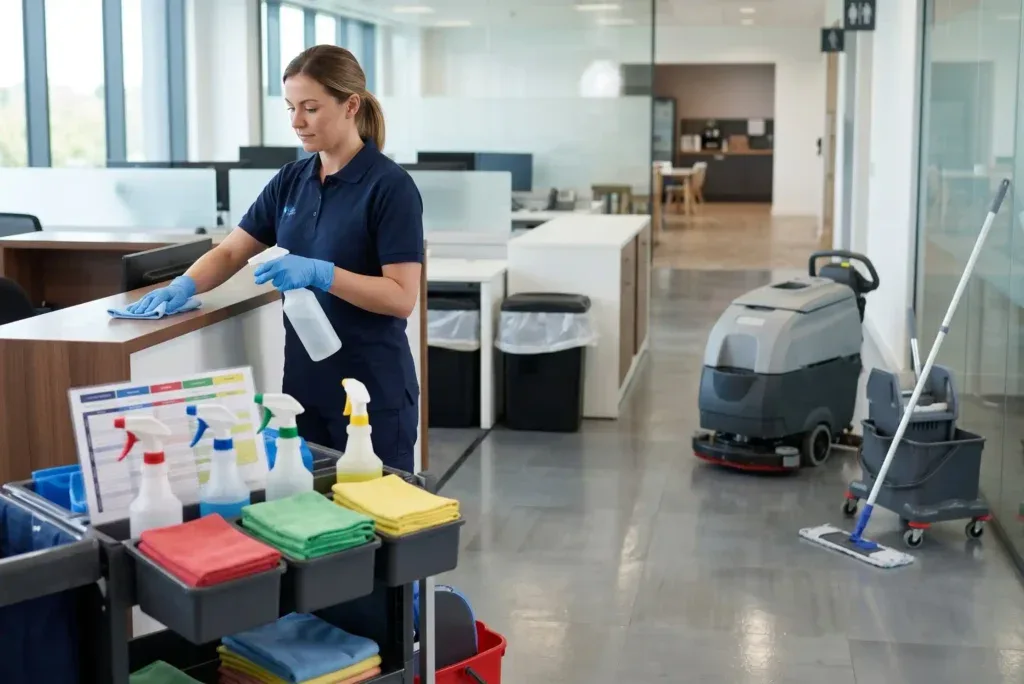
A commercial cleaning checklist is a written list of the cleaning tasks a building needs, organized by area and by how often each task should happen. Its purpose is to make sure nothing is skipped and everyone knows what “done” means. A good professional cleaning checklist also removes guesswork when staff change or when responsibilities are shared between in-house teams and outside providers.
A complete checklist covers several elements. Recurring tasks include emptying trash, wiping desks and counters, and vacuuming or mopping floors. Sanitation covers restrooms, break room surfaces, and shared touchpoints such as door handles and light switches. Room-specific work recognizes that a reception area, a kitchen, and a restroom each need different methods and products. The list should also name the supplies required and include a way to inspect the results.
A vague entry like “clean the restroom” is hard to follow and impossible to verify. “Refill soap and paper products, disinfect toilets and sinks, wipe mirrors, empty bins, and mop the floor” tells staff exactly what to do and lets a supervisor check it off. That level of detail is what separates workplace cleaning that holds up from cleaning that varies by who is on shift.
How to Build a Commercial Cleaning Checklist Today
Building a checklist takes less time than most businesses expect. Start with a walk-through of the space and a notepad. Then turn what you see into areas, tasks, and frequencies. The three steps below cover the whole process.
Identify Every Area That Requires Regular Cleaning
Walk through the building and list every space, including the ones that are easy to forget. Offices, meeting rooms, restrooms, kitchens, entrances, hallways, reception areas, storage rooms, and stairwells all belong on the list. Note the flooring type in each area, since carpet, tile, and hard surfaces need different care. A complete area list is the foundation of any business cleaning checklist, because a task that has no area assigned to it rarely gets done.
Assign Tasks by Frequency and Cleaning Priority
Sort the tasks into daily, weekly, monthly, and condition-based groups. Restrooms, kitchens, entrances, and shared touchpoints usually sit at the top of the daily group because of their traffic and sanitation needs. Baseboards, partitions, and vents fit better on a weekly or monthly cycle. Condition-based tasks, such as carpet treatment after a spill, happen when a specific need appears. Ranking tasks by use and hygiene impact keeps the list realistic.
Add Responsibilities, Supplies, and Completion Checks
A useful checklist also says who does each task, which supplies they need, and how completion is confirmed. Add a column for the responsible person or team, a note for special instructions such as products to avoid on certain surfaces, and a space to initial or date each task. Even a home reset checklist shows how tasks, checkboxes, and notes can be laid out on one page, and the same structure adapts easily to a workplace.
Daily Commercial Cleaning Tasks for Every Workplace
Daily cleaning is what keeps a workplace presentable and hygienic from morning to close. A daily commercial cleaning checklist focuses on visible cleanliness, high-touch areas, trash, restrooms, and floor upkeep, because these are the things employees and visitors notice first.
Refresh Offices, Desks, Entryways, and Shared Spaces
Start with the spaces people use most. Clear clutter from shared surfaces, wipe desks and tables where employees have asked for it, and collect trash and recycling from every workstation and common bin. Entryways deserve early attention since they set the first impression, so wipe glass doors, shake out or vacuum mats, and clear debris from the floor. The same principle behind a daily cleaning routine at home applies here: short, repeated tasks work better than occasional large efforts.
Maintain Restrooms and High-Touch Surfaces Daily
Restrooms should be cleaned and restocked every working day. Disinfect toilets, sinks, and faucets, wipe mirrors and counters, refill soap, paper towels, and toilet paper, and empty waste bins. Sanitize handles, switches, dispensers, and stall locks, since these are touched constantly. If a spill or visible contamination appears during the day, address it right away instead of waiting for the end-of-day round.
Check Floors, Trash, and Common Areas Before Closing
Finish the day with a walkthrough. Sweep or vacuum visible debris, spot-mop spills, and remove all waste from bins and break areas so odors do not build overnight. Check the reception area, hallways, and meeting rooms for stray items or marks. A final look at shared spaces catches small problems while they are still easy to fix and leaves the workplace ready for the next morning.
Weekly Cleaning Tasks That Keep Offices Ready
Some tasks do not need to happen every day, but they should not wait longer than a week. A weekly commercial cleaning checklist covers the detailed work that daily cleaning leaves out and supports a steady office cleaning schedule.
Detail Office Surfaces and Less-Accessed Areas Weekly
Weekly cleaning is the time to reach baseboards, shelves, partitions, furniture edges, window sills, and corners. Dust builds up in these places slowly, and daily routines rarely touch them. When a job is larger than the weekly window allows, it can move to a deep cleaning checklist that covers vents, high surfaces, and hidden areas on a periodic basis.
Give Office Floors a More Thorough Weekly Cleaning
Floors take the most wear in a workplace, so they benefit from a fuller weekly pass. Vacuum carpet slowly along edges and under desks, and mop hard floors with a product suited to the material. Clean along walls, corners, and around furniture legs where daily cleaning tends to skip. Entrances and hallways may need extra passes depending on foot traffic and weather.
Review Kitchens, Restrooms, and Shared Facilities
Give break rooms, restrooms, and other shared facilities a more detailed weekly clean. Wipe down the outside of appliances, clean the microwave and refrigerator shelves, and check storage areas for spoiled items. In restrooms, scrub grout and tile, descale fixtures where needed, and clean behind toilets and around bases. These spaces see constant use, so weekly attention prevents buildup that becomes hard to remove.
How to Organize Kitchen and Break Room Cleaning
Workplace kitchens and break rooms need steady attention because food residue, moisture, and shared use invite problems quickly. Good commercial cleaning here focuses on the surfaces people touch and the areas where food collects. Counters, tables, sinks, and appliance handles come first, and waste removal follows close behind.
Daily cleaning should include wiping counters and tables, cleaning the sink and faucet, emptying trash and recycling, and wiping appliance handles and microwave doors. Spills should be cleaned as they happen so they do not harden or attract pests. Floors need sweeping and spot-mopping daily, since crumbs and drips collect around tables and under appliances.
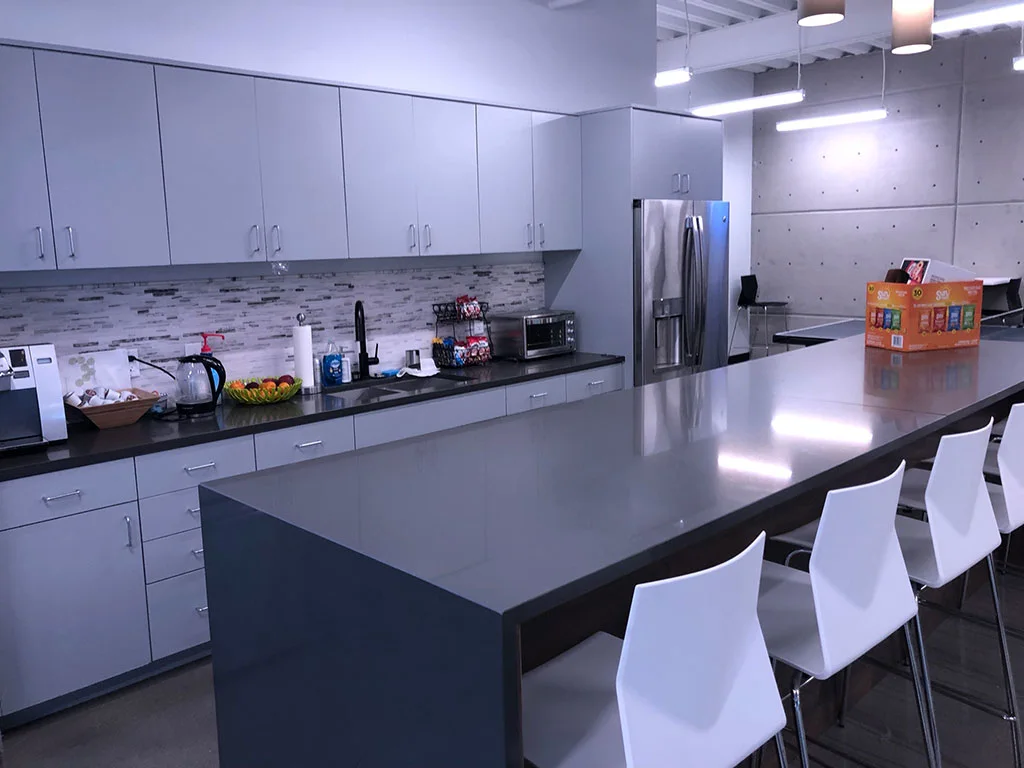
Weekly tasks go deeper. Clean the inside of the microwave and the refrigerator, remove expired food, wipe cabinet fronts, and degrease the surfaces around the coffee station. Sanitation matters in these areas because many people share the same handles, buttons, and counters. Clean each surface first, then sanitize according to the product label, and keep sponges and cloths replaced or laundered regularly so they do not spread residue.
Restroom Cleaning Tasks for Better Workplace Sanitation
Restrooms shape how employees and visitors judge the whole building, so consistent maintenance is essential in any commercial space. A restroom that is clean, stocked, and odor-free signals that the entire facility is well managed, while a neglected one does the opposite.
Recurring restroom work includes disinfecting toilets, urinals, and sinks, cleaning faucets and handles, and wiping mirrors and counters. Soap, paper towels, and toilet paper should be refilled and dispensers checked for damage. Waste bins need to be emptied and liners replaced, and floors should be swept and mopped with a disinfecting cleaner. Touchpoints such as stall latches, door handles, and flush levers deserve extra attention because they are used all day.
Practical sanitation depends on order and timing. Apply the disinfectant, allow the label’s contact time, and then wipe, rather than spraying and wiping immediately. Never mix cleaning chemicals, and ventilate the room while working. If a spill or visible contamination appears, deal with it promptly with appropriate gloves and supplies, and mark the area so others avoid it until it is dry.
Office Floors and Surfaces That Need Regular Care
Different surfaces call for different methods, and visible cleaning alone can leave important areas untreated. Office floors, desks, glass, partitions, doors, and fixtures each collect a different kind of dirt and respond to different products. Treating them all the same can leave streaks, damage finishes, or miss buildup entirely.
Carpet needs regular vacuuming and occasional deeper treatment, while hard floors need sweeping and mopping with a suitable cleaner. Desks and tables are usually wiped with a mild cleaner, though electronics and monitors need a dry or barely damp microfiber cloth. Glass and partitions show fingerprints quickly and benefit from a streak-free glass cleaner. Doors, handles, and railings collect residue from constant contact and should be wiped on a regular schedule. High-traffic areas such as entrances and hallways need more frequent cleaning than low-use offices.
Check product labels and manufacturer guidance before using any cleaner on wood, stone, or specialty finishes. A short surface-care note in the checklist, listing what to use on each surface, helps staff avoid damage and keeps results consistent from shift to shift.
How to Keep Common Areas Clean and Presentable
Reception areas, hallways, waiting spaces, meeting rooms, and shared break areas are the parts of a workplace that visitors and employees see most. Keeping them presentable depends on consistent routine tasks, not occasional big pushes. Because these spaces are used by many people, dirt, clutter, and fingerprints accumulate quickly.
Reception and waiting areas need dust-free surfaces, tidy magazines or materials, clean glass, and vacuumed or mopped floors. Hallways need regular floor care and wiped handrails, door handles, and light switches. Meeting rooms should be reset after use, with tables wiped, chairs straightened, and trash removed. Shared break areas overlap with kitchen cleaning and need the same attention to tables, counters, and waste.
High-traffic areas benefit from a short mid-day check when possible, especially entrances after bad weather. A quick pass to clear debris, wipe visible marks, and empty full bins keeps the space presentable without a full cleaning cycle. Checklists that list common areas separately make sure these shared spaces do not fall between other responsibilities.
Commercial Cleaning Schedules for Consistent Results
A checklist tells you what to clean, and a schedule tells you when. Turning individual items into a practical cleaning schedule keeps the workload steady and prevents tasks from stacking up. The goal is to organize daily, weekly, monthly, and occasional tasks without creating a workload no one can sustain.
Divide Cleaning Tasks Into Daily and Weekly Cycles
Sort recurring tasks by how often they truly need to happen. Trash, restrooms, kitchen surfaces, and entrance floors belong in the daily cycle. Detailed dusting, floor edges, and deeper appliance cleaning fit into the weekly cycle. Separating the two makes the checklist easier to follow and stops daily work from growing into a job that runs late.
Match Cleaning Frequency to Traffic and Workplace Use
Entrances, restrooms, kitchens, and hallways see more use than storage rooms or private offices, so they need shorter cleaning cycles. A busy reception area might need attention throughout the day, while a rarely used conference room may only need a weekly pass. Look at how each space is actually used, including visitor volume and staffing patterns, and set the frequency accordingly.
Review the Schedule and Adjust Tasks as Needed
A schedule should change as the workplace changes. Inspection results, seasonal weather, changes in headcount, and recurring problem areas are all signals that the schedule needs adjustment. If a certain spot keeps getting dirty between visits, increase its frequency. If a task is consistently unnecessary, drop it or move it to a longer cycle.
Office Cleaning vs Commercial Cleaning Explained
Office cleaning is one type of commercial cleaning, and it focuses on workspaces such as desks, meeting rooms, reception areas, and employee restrooms. Broader commercial cleaning covers many kinds of buildings, including retail spaces, shared facilities, and other business properties, each with its own requirements. Neither is universally better. The right scope depends on what the building is used for and who uses it. Businesses that want help matching a checklist to their space can look at commercial cleaning services to see how scope is defined.
| Cleaning Focus | Office Cleaning | Broader Commercial Cleaning |
| Main spaces | Offices, meeting rooms, reception areas | Offices, retail, facilities, shared buildings, and other spaces |
| Common tasks | Desks, floors, restrooms, shared areas | Area-specific cleaning based on facility use |
| Frequency | Often structured around office activity | Varies by building traffic and operations |
| Special needs | Workstations and employee areas | May include facility-specific sanitation requirements |
| Checklist scope | Focused workplace cleaning | Can cover a broader range of commercial areas |
How to Manage High-Touch Areas and Sanitation
High-touch surfaces are the points that many hands contact throughout the day, so they deserve a dedicated place in any commercial cleaning program. Cleaning removes dirt and residue, and sanitizing then reduces germs on the clean surface. Focus on the places people touch most:
- Door handles, push plates, and light switches
- Elevator buttons and stair railings
- Faucet handles, soap dispensers, and flush levers
- Shared equipment such as copiers, phones, and keyboards
- Break room counters, appliance handles, and coffee stations
- Conference table surfaces and shared remote controls
Routine cleaning of these points can happen daily, or more often in busy buildings. Some situations call for additional procedures, such as after illness in the workplace or a visible contamination event. In those cases, follow the product label for contact time, use appropriate protective equipment, and check any facility or local guidance. Not every surface needs constant sanitizing, so focus on the ones that matter most.
Cleaning Supplies and Tools for Commercial Spaces
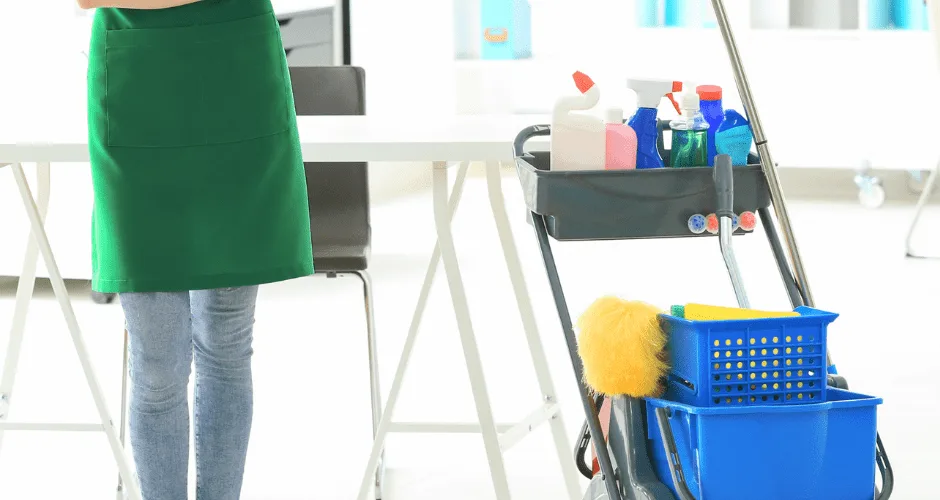
Consistent results depend on having the right supplies on hand. When staff have to hunt for products or improvise, tasks get skipped. A supply list built into the checklist keeps everything ready and prevents shortages from disrupting the schedule.
The basics include microfiber cloths for dusting and wiping, a commercial vacuum with attachments, mops and buckets, and surface cleaners suited to different materials. Restrooms need disinfectant, toilet bowl cleaner, and refill stock for soap and paper products. Waste bags, gloves, and signs for wet floors round out the essentials. Color-coded cloths can help keep restroom and kitchen tools separate and reduce cross-contamination.
Choose products based on surface type and the job, not one product for everything. Label bottles clearly, store chemicals safely and away from food areas, and keep safety data information available to staff. Check supply levels regularly so nothing runs out unexpectedly, and replace worn mops, cloths, and vacuum filters before they lose effectiveness.
Common Commercial Cleaning Mistakes to Avoid
Most cleaning problems in commercial spaces come from a few repeated mistakes. Here is what to watch for and how to fix each one:
- Inconsistent scheduling. Tasks done “when there’s time” get missed. Set fixed frequencies and post the schedule where staff can see it.
- Unclear responsibilities. When no one owns a task, no one does it. Assign each task to a named person or team on the checklist.
- Ignoring high-touch areas. Handles, switches, and shared equipment get overlooked because they look clean. Add them to the daily list by name.
- Using unsuitable products. The wrong cleaner can damage finishes or leave residue. Match products to surfaces and check labels.
- Skipping inspections. Without a check, missed work goes unnoticed. Add a short walkthrough or sign-off to each cleaning round.
- Cleaning in the wrong order. Mopping before dusting means doing floors twice. Work from high surfaces to low, and finish with floors.
- Mixing chemicals. Some combinations create harmful fumes. Use one product at a time and never combine disinfectants.
How to Review and Improve Your Cleaning Checklist
A checklist that never changes eventually stops matching the workplace. Regular reviews keep it practical and help the cleaning process improve over time. Use inspection results to see which tasks are consistently missed, which areas keep having problems, and where the checklist is too vague or too ambitious.
Ask staff for feedback, since the people doing the work often notice gaps first. Look at supply issues, such as products that run out early or tools that do not work well. Consider changes in how the workplace is used, including new tenants, added headcount, remodeled areas, or seasonal changes that bring more dirt indoors. Each of these can change what belongs on the list and how often tasks should happen.
Review the checklist on a set schedule, such as quarterly, and update it after any major change in the space. Remove tasks that no longer apply, add new ones, and adjust frequencies where needed. If gaps persist despite good planning, or if the workload outgrows in-house capacity, professional cleaning services can take on part of the schedule while your checklist keeps the standards clear.
Final Thoughts on a Safer, Cleaner Commercial Space
A well-planned commercial cleaning checklist gives daily and weekly responsibilities a clear structure. It shows what needs to be cleaned, how often, by whom, and with what supplies. Judy Maids can provide professional cleaning support to help maintain this structure and keep essential areas consistently cared for. That clarity is what turns cleaning from a scramble into a reliable routine, protecting the parts of the workplace that matter most, including restrooms, common areas, office floors, and high-touch surfaces.
Sanitation and a realistic schedule work together. Cleaning removes visible dirt, sanitizing addresses the surfaces many people share, and a schedule that fits the building’s traffic keeps the workload manageable. No single checklist fits every building, so adjust yours to your building size, foot traffic, workplace activities, and cleaning requirements.
Take some time this week to walk through your space and write down what needs attention. Create your checklist, assign the tasks, and set a date to review it. If you already have one, look at what has been missed and improve it, because a checklist that keeps evolving is the one that keeps your workplace clean.
Commercial Cleaning Checklist FAQs for Businesses
Even with a full checklist in place, practical questions often remain about running a commercial cleaning program. The answers below cover frequency, checklist contents, responsibilities, and scope. They add to the guide above without repeating it.
It depends on foot traffic, building size, and the type of business. Many offices are cleaned several times a week or daily, while lower-traffic spaces may need less. High-use areas such as restrooms and break rooms usually need the most frequent visits.
It typically covers trash removal, restroom cleaning and restocking, wiping desks and shared surfaces, sanitizing high-touch points, and vacuuming or mopping main floor areas. Break room counters and entrance areas are also common daily items.
Restrooms, break rooms, entrances, and reception areas usually need the most attention because they see the heaviest use. Shared touchpoints such as door handles, switches, and copiers also collect germs quickly.
Start with a walk-through of every area, then note flooring types, traffic levels, and special requirements. Add or remove tasks based on how each space is used, and adjust frequencies for busy or quiet areas. Update it whenever the layout or occupancy changes.
Weekly tasks often include detailed dusting of shelves and baseboards, thorough floor cleaning along edges, appliance cleaning in break rooms, and deeper restroom scrubbing. Cleaning partitions, vents, and window sills can also fit into a weekly or monthly cycle.